
Job searching goes well beyond traditional job boards. Find out how to put your best foot forward by using your social networks to advance your career.

SOCIAL MEDIA BEST PRACTICES
Utilize your network to find the right opportunities for you!
Social Media and Networking Best Practices
Scrub your social networks and delete public posts that are unprofessional or political.
Consider deleting accounts that you no longer use.
Sharing meaningful, relevant, and professional content will enhance your profile.
Unprofessional or pointless updates could damage the perception of your qualifications.
Consider deleting accounts that you no longer use.
Sharing meaningful, relevant, and professional content will enhance your profile.
Unprofessional or pointless updates could damage the perception of your qualifications.
Remain active/increase posts across your social media platforms, especially those geared towards professional interests (LinkedIn, Indeed, etc.) Be sure to double check your posts before going live to ensure proper grammar and spelling, as well as checking for a neutral tone and professionalism.
Post/repost articles that are relevant to your experience and areas of expertise. Cross-post to each social media account for greater visibility across your networks. Be sure to follow relevant, career-oriented sites to stay informed of the latest information in your field.
Networking can be online, virtually, by text or any other way that works for you!
After you have logged into your LinkedIn account, you can search/join groups here: https://www.linkedin.com/groups/
LinkedIn Groups to consider:
Food Technology and Innovation
Global Jobs Network
SME Manufacturing
Niche Jobs - Manufacturing, Engineering, HR, Management, Sales
Food Manufacturing Industry Professionals
Food Manufacturing Careers
Society for HR Management (SHRM) Official Group
LinkedIn HR
Logistics and Supply Chain Professionals
Sales Best Practices - Networking
Your alma mater’s alumni groups
Any other groups specific to your job function. For these types of groups, try to join groups with a substantial membership, such as 500 or more.
You can use this link to search Professional Associations. We also recommend the following associations that may be relevant to your recent experience:
International Bottled Water Association
International Foodservice Manufacturers Association (IFMA)
National Association of Water Companies (NAWC)
International Bottled Water Association
International Foodservice Manufacturers Association (IFMA)
National Association of Water Companies (NAWC)
Search for jobs using hashtags like #hiringnow and #hiring, and add relevant hashtags to your own online profiles.
Hashtag options for your profiles:
#readytowork (be sure to add on your Indeed profile)
#jobsearch
#careerchange
#job
#jobs
#jobhunt
#hireme
#resume
#needajob
#unemployed
#availablenow
Hashtags relevant to your career/background (Ex: #MBA #supplychain #logistics)
Hashtag options for your profiles:
#readytowork (be sure to add on your Indeed profile)
#jobsearch
#careerchange
#job
#jobs
#jobhunt
#hireme
#resume
#needajob
#unemployed
#availablenow
Hashtags relevant to your career/background (Ex: #MBA #supplychain #logistics)
Show your own “voice” and personality in a genuine but professional manner. Use your real name on your social media accounts, and review each profile/bio to ensure you’re presenting a polished image of yourself.
Sites to consider: LinkedIn, Indeed, Glassdoor, ZipRecruiter, Monster, Google for Jobs, Careerbuilder, SimplyHired, and company-specific career sites.
Please note: Most staffing agencies require a premium fee for a company to hire you, and you would then be prevented from applying to jobs directly with that company for a period of up to a year. It is best to apply directly through company websites (or their postings on LinkedIn, Indeed, etc.), and to find connections to people who already work there.
If you type, “looking for employment” on a search engine, multiple links to job boards will populate listing around 25-30 job boards.
Include details such as company name, position title, date you applied, current status, and follow-up action items. When you are applying to numerous opportunities, this will help you stay organized and keep track of each position/recruiter.
Update Your LinkedIn Profile
Be sure to use a professional picture/headshot and background photo
- Login to LinkedIn. On your profile page, click on your photo icon/the drop down menu under “Me” and begin editing/updating/enhancing your profile by clicking on “Add profile section”
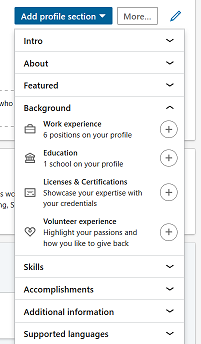
Enable the option to show that you are open to new opportunities.
- Under your profile header, click "Get started"
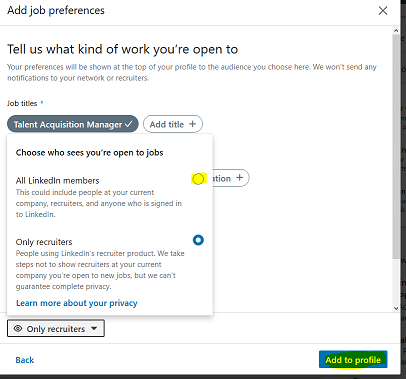
- On the next screen, under “Choose who sees you’re open to jobs,” select “All LinkedIn members” then click “Add to profile”

- On the next screen, under “Choose who sees you’re open to jobs,” select “All LinkedIn members” then click “Add to profile”
Tell us everyone about yourself!
Share your story – overview of your career history and accomplishments, what you're passionate about
- Ensure each position you list details your responsibilities and impact
- Make sure your contact information is up-to-date, and link to other places you can be found online (Twitter, etc.)
- Make your contact information visible so it’s easy for recruiters to get in touch with you. To check your settings, click the down arrow under ‘Me’ on the right-hand side of your profile. Then click “Settings and Privacy.” You will see several options for editing the visibility of your profile, your email address, and options for you to be searched. You have the option to make each setting viewable by anyone, only your connections, or 1st and 2nd degree connections. While you are job searching, we recommend making your email address available to anyone.
- Ask others for recommendations. Recommendations are a great way to showcase your performance, receive endorsements from former colleagues and provide prospective employers with references for your work.
- You can find the ‘Recommendations’ section below your experience within your LinkedIn profile:

Update your Facebook!
Companies utilize your profile's education and work experience information to target ads about job opportunities; however, only those users who have included the information within their profiles will receive these notifications and advertisements.
- To update these settings, go to your Profile > Edit Details > and then complete work history and educational information:
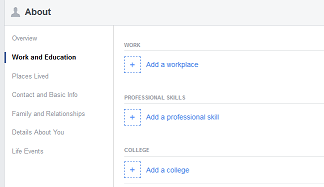
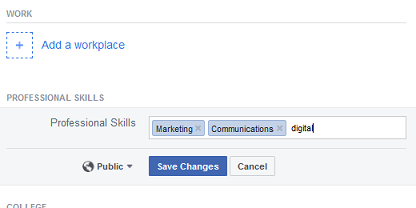
- Add specific information about your background (types of technology used, certifications, responsibilities, functional areas) so that your profile will be pulled into targeted audiences that companies are selecting. For example:
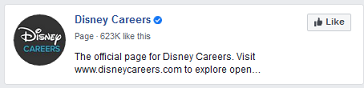
- Follow companies that you are interested in pursuing. Many companies have both brand pages and career pages, so do a Facebook search for both to make sure you are being kept apprised of career opportunities.

Other Social Platforms
- The main social media platforms companies typically utilize for recruitment are LinkedIn, Facebook, Instagram, and Twitter.
- Employers who advertise their roles on Facebook typically have the same ads on their Instagram sites, so follow the Instagram pages (brand, and career, if applicable) of any employers you’re interested in.
- If you are a Twitter user, you'll want to follow the same practices as Facebook, LinkedIn, and Instagram. Follow brand and career pages, make sure that your Twitter bio is updated to reflect your skillset and profession, and check your previous tweets to make sure that they are neutral and professional. Twitter is a great place to engage in conversations with other industry professionals by replying or retweeting content.